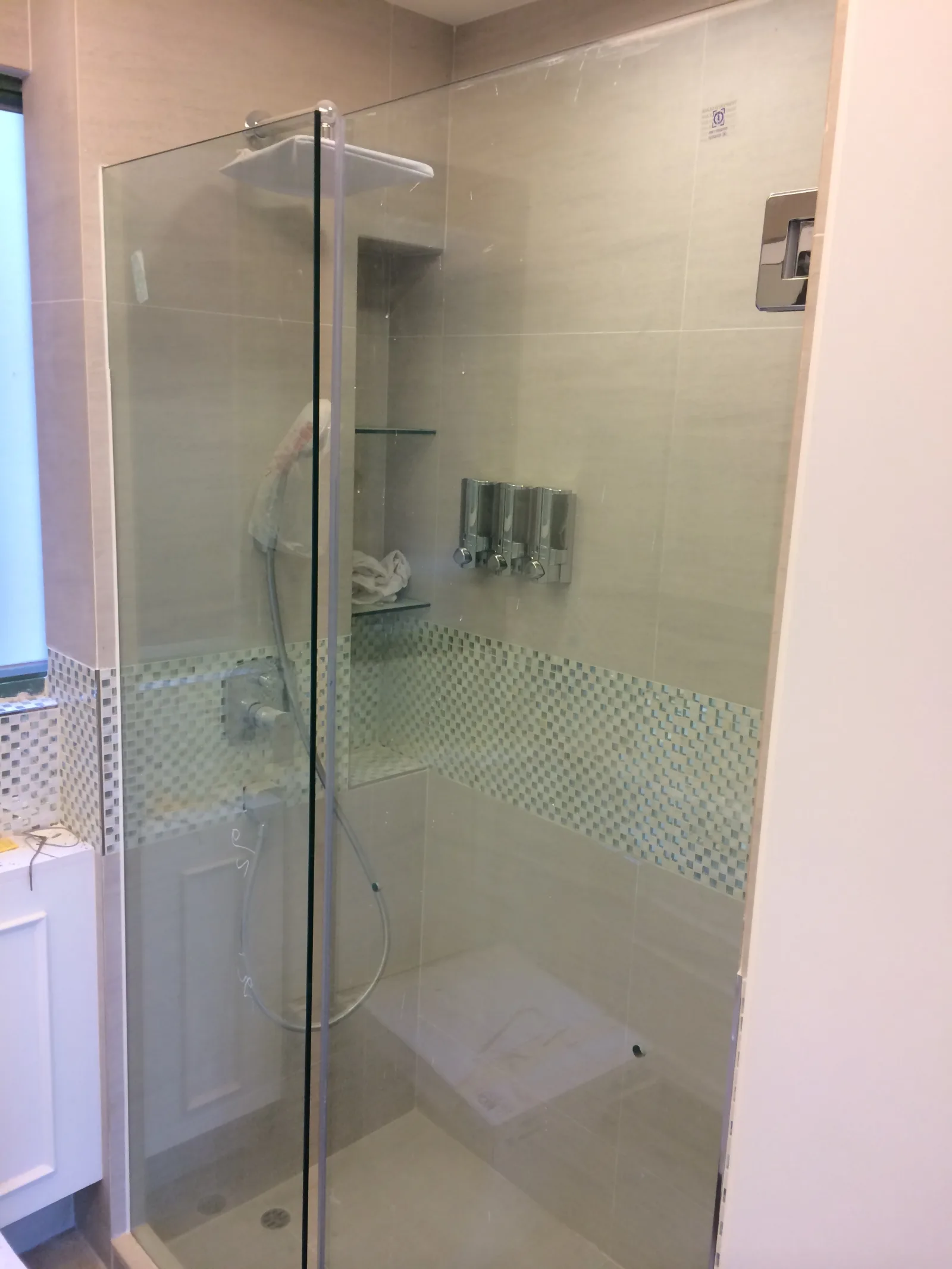
Shower Screens | Custom Enclosures, Bath Screens & Leak Repairs

SK Fung supplies custom hotel-style shower screens for homes, serviced residences and commercial properties: straight, L-shaped, sliding, hinged and folding enclosures, plus bath screens. We repair leaks, aged seals, sagging hinges and failed rollers, designing around dimensions, drains and wall alignment.

Free on-site measurement, design and quotations. Call 3709 2164 or WhatsApp 6686 7879 to enquire.

Registered Minor Works Contractor MWC(W) 42/2014, with window inspection qualifications and CIC-certified technicians. Coordinate with bathroom and anti-fog mirrors and glass partitions.

Service Overview

Shower Screens

Custom hotel-style screens suit bathroom renovations. Site dimensions, drains and wall alignment determine the design, reducing leaks and dirt traps while keeping a clean appearance.

  • Shower enclosures suit smaller bathrooms.
  • Bath screens offer fixed and sliding options.
  • Old-screen repairs address worn hinges and hardened seals.

Three water paths matter: floor falls directing water to drains, thresholds and seals containing spray, and drainage allowing water past seals to return to the wet area. Uneven older walls and poor falls make standard-sized screens prone to leaks; accurate measurement is essential.

Free site measurement WhatsApp enquiry Completed projects

Toughened-glass shower screen with stainless steel fittings and weather seals
Browse completed shower screen photographs.

Choosing a style

Seven common styles and applications

Choose for room size, sanitary fittings and door clearance before appearance.

Shower screen comparison
StyleFeaturesSuitable Situation
Fixed straight screenSimple, durable and without moving components.Small rooms and partly open shower areas.
Sliding screensNo swing clearance; maintain tracks, drainage and rollers.Narrow entrances or toilets and basins opposite.
Hinged screens: inward / outward openingEffective seals and optional self-return hinges.Bathrooms with adequate swing space.
Folding screensCompact when opened.Very small or narrow shower areas.
L-shaped enclosuresCreate a separate wet area.Corner showers.
Fixed bath screensFit on bath rims to contain spray.Homes retaining bathtubs.
Pivoting bath screensFold inward for bath cleaning.Families and regularly cleaned baths.

Frameless, semi-framed and framed

Frameless screens are easy to clean but demand accurate walls, floors and seals. Semi-framed systems reinforce key edges. Framed systems usually include drainage channels and tolerate irregular older walls better, but have heavier lines and dirt-collecting corners.

Near-ceiling screens

Taller screens contain spray and steam but need adequate extraction to prevent damp and mould. Coordinate silver bathroom mirrors and demisting. Increased glass weight requires stronger hardware and anchors.

Opening direction and clear width

Check that doors avoid toilets, basins, bathroom doors and towel rails while leaving sufficient access. A hinged panel that hits fittings halfway open creates an impractical entrance.

Glass Specifications

Toughened glass, heat-soaking and finishes

We use toughened glass, stronger than ordinary glass and breaking into small particles. Specify thickness for size and style; large fixed panes and wide doors require appropriate stiffness and hardware capacity.

Heat-soaking is a key safety measure. The 2018 structural glass code addresses spontaneous toughened-glass breakage caused by NiS inclusions. Heat-soaking rejects susceptible panes before use. Specify treated glass where appropriate, especially for higher safety requirements.
Optional surface and additional treatments
TreatmentPurposeConsiderations
Hydrophobic easy-clean coatingReduces water adhesion, scale and soap build-up.Not permanent; avoid abrasives and strong acids or alkalis.
Safety filmRetains fragments if glass breaks.Additional protection, not a substitute for correct installation or heat-soaking.
Frosted / translucent glassImproves privacy.May show water marks and need more frequent cleaning.
Tinted glass: grey / bronzeMatches the overall style.Dark glass reduces light; consider small rooms.
Polished / chamfered edgesReduce cuts and chips that can initiate fractures.Required for all exposed edges.

Processed toughened glass cannot be cut or drilled on site. Locate handles, hinges and rails before toughening, using site measurements.

Safety guidance

Spontaneous breakage: causes, likelihood and prevention

A common concern with several frequent misconceptions.

Nickel sulphide inclusions

NiS inclusions can change phase after toughening and expand by approximately 4%, creating stress sufficient to fracture a pane. They cannot be detected visually. Breakage may occur at any time, more commonly within the first five years, but later failure remains possible.

Other causes

  • Edge damage: small handling or use-related chips can develop into cracks.
  • Installation loads: concentrated clamp or hinge loads and rigid restraint stress glass.
  • Sticking or misaligned hardware: creates sustained loading.
  • Thermal stress: sudden hot water on cold glass creates temperature differences.

How likely is it?

Industry estimates vary: traditional production is quoted at 0.3%–0.8%, and newer quality-controlled production at 0.01%–0.08%. Some US sources quote roughly one shower pane in 800 annually. These estimates use different bases. Compliant glass and correct installation reduce risk, but no method guarantees complete elimination of NiS risk.

Five risk-reduction measures

  1. Specify heat-soaked toughened glass.
  2. Finish edges properly and avoid handling damage.
  3. Avoid point loads and rigid clamping; allow suitable tolerances.
  4. Avoid sudden temperature changes and boiling water on cold glass.
  5. Consider safety film to retain fragments.

Hardware and consumables

Fittings, seals and thresholds

Hardware and seals often determine service life before the glass does.

Hinges and clamps

Use stainless or corrosion-resistant materials with compatible screws and bases. Self-return hinges are available.

Sliding rollers and tracks

Choose smooth, serviceable rollers and drainable tracks. Dirt and ponding cause sticking and uneven loads.

Bottom drip seals

Guide water back into the wet area. Hardened, shrunken or detached seals commonly cause leaks and can be replaced separately.

U / F profile edge seals

Close wall and frame gaps, contain spray and cushion glass contact.

Magnetic seals

Pull meeting edges together. Replace weakened or deformed strips as needed.

Water stops / thresholds

Contain floor water; coordinate height with falls. Missing or low thresholds may need redesign during replacement.

Leak prevention

Leak causes and sealant direction

Diagnose first: resealing the wrong path will not resolve leakage.

Six common sources

  1. Aged bottom seals: water escapes under the door.
  2. Cracked or incorrectly placed silicone: traps water rather than allowing return drainage.
  3. Loose hinges or sagging doors: leave closure gaps.
  4. Poor floor falls or distant drains: water collects by doors.
  5. Missing or low thresholds: water crosses the base.
  6. Spray aimed at joints: adjust shower direction or screen design.
Preserve a drainage path; do not seal both faces completely. Trapped water can cause persistent leaks and mould.

Sealant details for two systems

SystemSealant locationPrinciple
Framed systems with drainage channelsUsually seal the outside / dry side.Internal channels return water to the wet area while the outer seal protects the dry floor.
Frameless glass on floors or bath rimsContinuous wet-side sealing, with approximately 2–3 mm drainage gaps at the outer floor junction where the system requires.The inner seal blocks water; the drainage detail releases any water crossing it rather than trapping it under the base.

Follow the actual system, floor or bath detail and existing waterproofing. Leaks affecting neighbouring walls or ceilings below may involve waterproofing or drains and need separate assessment. Check window seals if nearby walls show stains.

Repair or rebuild

Choosing repair versus replacement

SituationRecommendationWork
Sound glass, dripping at the bottomRepair.Renew drip seals and anti-mould silicone.
Sagging door or poor closureRepair.Adjust or replace hinges, align panels and renew magnetic seals.
Sticking sliding doorsRepair.Clean tracks, replace rollers and realign.
Mouldy or hardened sealsRepair.Replace strips and remove and renew silicone.
Chipped or cracked glassReplace glass.Replacement is necessary; chips can initiate breakage.
Corroded hardware or incompatible holesReplace the system.Renew glass and hardware together to avoid mismatched loads.
Missing water stops or drainage pathsRebuild.Redesign screens, thresholds and drainage together.

Book a screen inspection View shower screen projects

Measurement

Six checks at the site visit

Older walls are often out of plumb; standard dimensions alone are insufficient.

Wall alignment

Measure top, middle and bottom deviations for adjustable frames or seal tolerances.

Base levels

Check stone, tiles and bath rims for even glass support.

Drains and falls

Confirm natural flow to drains and design thresholds and door edges accordingly.

Existing waterproofing

Repair damaged waterproofing first; a screen cannot fix a failed floor layer.

Fittings and entrances

Measure toilets, basins and doors to establish swing direction and clear access.

Tiles and anchors

Check loose tiles, drilling suitability and supporting structure.

Our process

Seven steps to completion

  1. Enquiry: call 3709 2164 or WhatsApp 6686 7879 about installation, replacement or leaks, with approximate dimensions.
  2. Free measurement: perform the six checks and confirm style, opening and hardware.
  3. Design and quotation: specify glazing, finishes, fittings, seals, thresholds, removal and programme.
  4. Fabrication: process measured glass with all holes before toughening.
  5. Removal and preparation: remove old screens and adhesive, clean bases and repair fixing locations.
  6. Installation: align glass and hardware, fit seals and apply system-specific silicone with drainage preserved.
  7. Inspection and handover: water-test joints, check movement and closure and explain curing time and cleaning.

Wait for the installer's specified silicone curing period before showering.

Cleaning and care

Six habits for longer screen life

  • Squeegee or towel-dry after use to prevent stubborn scale.
  • Avoid wire brushes and abrasive powders that scratch glass or coatings.
  • Avoid strong acids and alkalis, especially prolonged contact with fittings and seals.
  • Maintain extraction and ventilation; deeply mould-stained silicone needs replacement.
  • Check seals and silicone for hardening, lifting or detachment and renew early.
  • Adjust sagging or sticking doors promptly; forcing them increases glass stress.

Combine care of screens, mirror edges and window seals in one visit.

Service coverage

Areas and property types

Our office is at Room F11, 10/F, How Ming Factory Building, 99 How Ming Street, Kwun Tong, Hong Kong; shower screen services cover Hong Kong Island, Kowloon and the New Territories.

  • Homes and estates: renovations, replacement and leak repairs.
  • Older buildings: irregular walls and inadequate falls requiring custom adjustment.
  • Serviced and hotel-style residences: coordinated multi-bathroom specifications and maintenance.
  • Commercial properties: clubhouse, gym and office shower enclosures.

Measure with mirrors, partitions, doors, windows and screens.

Frequently Asked Questions

Custom shower screen and repair FAQ

28 questions on styles, safety, hardware, leaks, quotations and care.

Which styles are available?

Fixed, sliding, hinged and folding; straight, L-shaped, three-sided and fixed or pivoting bath layouts; frameless, semi-framed and framed. Fixed or sliding systems suit small rooms without swing space.

Which glass is used?

Toughened glass, selected for size and stiffness with suitable hardware. Optional easy-clean coatings and safety film are available.

What is heat-soaking?

A production process rejecting toughened panes susceptible to NiS-related spontaneous breakage before use, as discussed in the 2018 structural glass code.

What causes spontaneous breakage?

NiS phase changes can expand inclusions by around 4%, creating internal stress. They are not visually detectable; failure can occur at any time. Edge damage, point loads, sticking hardware and thermal shock also contribute.

How frequent is it?

Published estimates vary: traditional production 0.3%–0.8%, newer quality-controlled glass 0.01%–0.08%, with some US estimates using different annual measures. Correct glass and installation reduce risk, but no method removes all NiS risk.

How can risk be reduced?

Heat-soaked glass, protected polished edges, suitable clamp tolerances, avoiding thermal shock and optional fragment-retaining safety film.

What usually causes leaks?

Aged bottom seals, failed or misplaced silicone, sagging hinges, poor falls, low thresholds and direct spray at joints. Identify the source before resealing.

Should silicone go inside or outside?

Follow the system and preserve drainage. Framed systems generally seal outside while channels drain inside. Frameless systems may need continuous wet-side seals with specified 2–3 mm outer drainage gaps. Sealing both faces can trap water and cause mould.

Repair or replace a leaking screen?

Sound glass and serviceable hardware often need seals, silicone or adjustment. Cracked glass, severe corrosion, failed frames or missing drainage and thresholds favour redesign or replacement.

Which seals are available?

Bottom drip seals, U / F edge seals, meeting strips and magnetic seals. Ageing is normal; many can be replaced without new glass.

Which hardware materials are suitable?

Stainless or corrosion-resistant hinges, clamps, handles and roller assemblies with compatible screws and bases. Consider self-return hinges and cleanable, drainable tracks.

How do bath and shower screens differ?

Floor-mounted enclosures depend on falls, drains and thresholds. Bath screens seal to the rim and need adequate spray height and cleaning access. Hardware and seals are not interchangeable.

What suits a small bathroom?

Fixed or sliding screens avoid swing clearance. If hinged, confirm opening direction and avoid collisions with fixtures and the bathroom door.

Frameless, semi-framed or framed?

Frameless is minimal but needs accurate walls and floors. Semi-framed balances support and appearance. Framed offers drainage and greater tolerance for older walls, with more cleaning corners.

Can screens reach the ceiling?

Yes, with sufficient extraction and stronger hardware for increased weight. Otherwise trapped steam can cause damp and mould.

What is easy-clean glass?

A hydrophobic coating reduces scale and soap adhesion. It is not permanent; avoid abrasive and harsh cleaners.

Can white scale be removed?

Light deposits respond to mild descaling and soft tools. Heavy old deposits may persist. Never scrape with wire brushes; drying after use is the best prevention.

What if seals turn black?

Early mould may be cleaned with suitable products and ventilation. Deep staining or hardened seals need silicone or strip replacement.

How long does custom fabrication take?

Measure and confirm first, then manufacture and install. All holes precede toughening. Allow silicone to cure before use as instructed.

What is checked at measurement?

Measurement checks walls and corners, bases, drains and falls, waterproofing, fixtures and access, tiles and anchoring suitability. These make custom sizing essential.

How is pricing calculated?

Style, layout, glass area and thickness, coatings or film, hardware, seals, thresholds, removal and access determine cost. Free measurement and design quotations are available.

Can I replace glass alone?

Only if existing hardware remains sound and compatible with exact hole positions. Inspect loading and alignment first; a full system may be safer where parts mismatch.

When can I shower after installation?

After silicone cures; timing depends on product, temperature and humidity. Follow the installer to avoid washing out uncured seals.

Can mirrors be installed with screens?

Yes, including silver bathroom mirrors, demisters and partitions, sharing measurement and installation for consistent finishes.

Does leakage downstairs mean a screen fault?

Not necessarily. Dry-area puddles often concern screens; ceiling or neighbouring-wall leaks may involve waterproofing or pipe joints. Assess separately and check windows where stains occur nearby.

Is maintenance available?

We provide repairs and ongoing maintenance for estates, businesses and serviced residences. Quotations specify coverage and duration for glass, hardware and seals.

What qualifications does SK Fung hold?

SK Fung holds MWC(W) 42/2014, window inspection qualifications and CIC-certified technicians, and undertakes related window, glazing, door, mirror and screen work under appropriate procedures.

Can I see similar projects?

Browse actual shower screen photographs and compare mirror, partition and door galleries for coordinated bathroom projects.