Interior Mirrors | Mirror Walls, Gym Mirrors, Anti-fog Mirrors & Shopfronts

SK Fung provides custom interior mirrors for homes, offices and shops: living-room and entrance mirror walls, dressing-room full-length mirrors, safety-backed gym and dance mirrors, anti-fog bathroom mirrors, salon and fitting-room mirrors, grey, bronze and black mirrors, diamond-pattern panels and shopfront glass finishes. We assess walls, panel divisions and safe fixing, then cut, polish and install to size.

Free on-site measurement, design and quotations. Call 3709 2164 or WhatsApp 6686 7879 to enquire.

Registered Minor Works Contractor MWC(W) 42/2014, with window inspection qualifications and CIC-certified aluminium window technicians. Coordinate mirrors with partitions, shower screens and glass doors.

Service Overview

Mirror Works

Mirrors enhance the sense of space in entrances, gyms, clothing shops and displays. We design panel divisions and safe fixing to suit the wall, for secure installation and easy cleaning.

  • Full-length / wall mirrors for homes and businesses.
  • Shopfront displays combining glass and mirrors.
  • Custom cutting to site dimensions.

Three things determine success: the right mirror for humidity, a flat substrate to prevent distortion, and secure fixing—large panels must not rely on adhesive alone. We establish these before panel divisions and edge details.

Free site measurement WhatsApp enquiry Completed projects

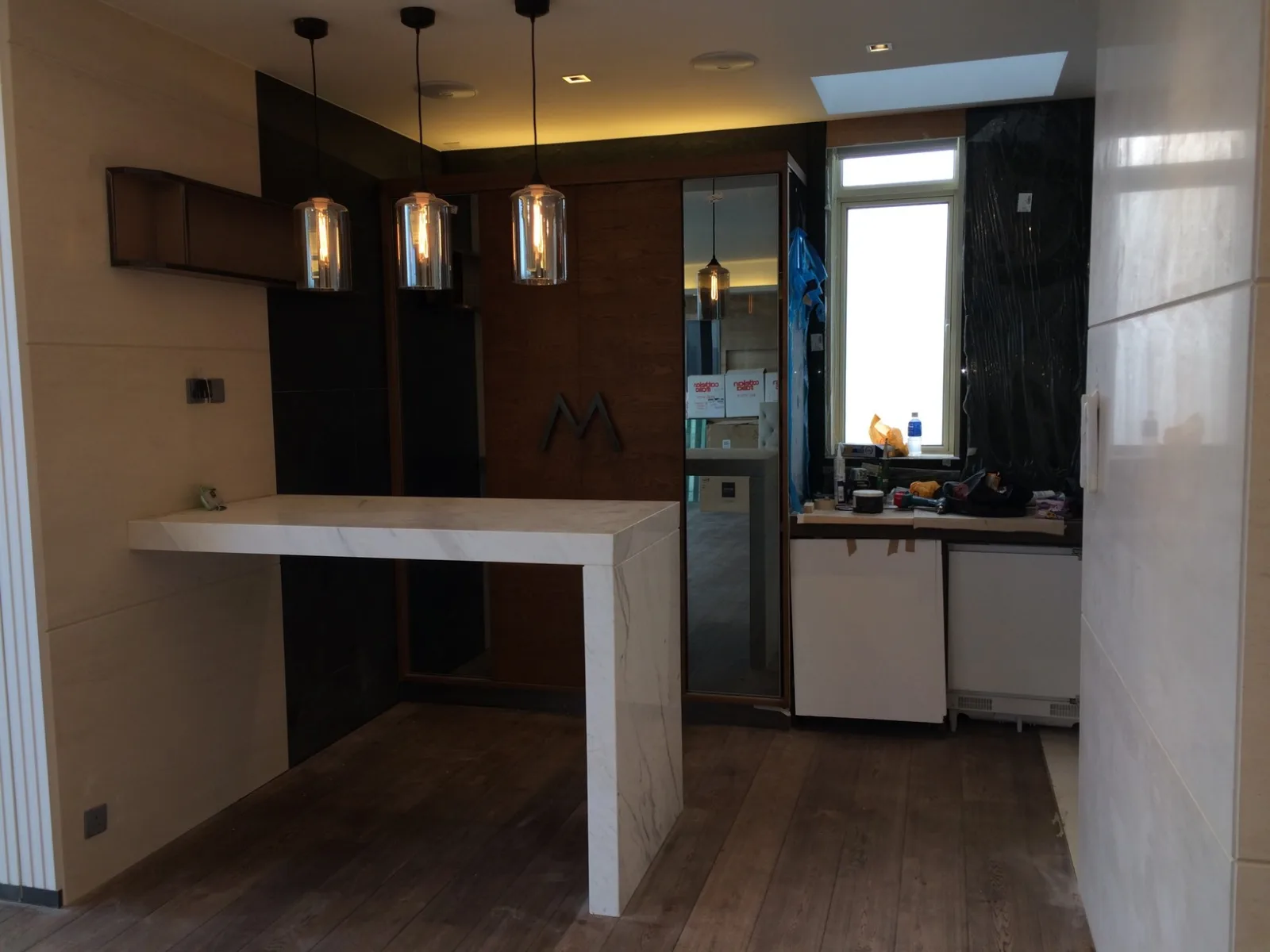
Large mirror wall with polished edges and secure fixing
Browse more interior mirror project photographs.

Applications

Eight common applications and design priorities

Entrances, bathrooms, gyms and fitting rooms need different materials and fixings.

Entrance and corridor mirrors

Mirrors visually widen narrow entrances and assist dressing. Place them on a side wall rather than reflecting the doorway, use full-body height and leave a protected base for cleaning. Divided or diamond-pattern panels reduce individual weights.

Living-room and TV-wall mirrors

Avoid reflections from bright windows and screens. Grey, bronze and black mirrors give softer reflections with indirect lighting. Large walls require a flat substrate, backing board or mechanical support.

Bedroom, dressing-room and full-length mirrors

Mirrors can fit wardrobe doors, sliders or walls. Check door weight, rollers and vibration; add safety backing and cushioning at frames. Neutral lighting helps judge clothing colours.

Bathroom and anti-fog mirrors

Silver mirrors generally resist moisture better than aluminium mirrors. Seal edges, ventilate the back and use mirror-compatible neutral silicone. Add electric demisting where needed; coordinate with shower screens.

Gym and dance-studio mirrors

Use safety backing film to retain fragments. Protect the base from equipment, design fixings for vibration, cover training sightlines and avoid direct glare.

Salon and make-up mirrors

Choose low-iron or low-colour-cast silver mirrors for accurate skin and hair colours. Front or side lighting reduces shadows; plan lighting and power at measurement.

Clothing shops and fitting rooms

Near-floor, low-iron mirrors improve colour accuracy. Chamfer or protect lower edges against hangers, shoes and trolleys, and add safety backing. Tinted display panels can add depth.

Shopfronts and restaurants

Clear display fronts with partial mirrored backs or sides add depth without excessive glare. Adjust spotlights rather than mirroring every surface. Bronze mirrors suit restaurant finishes; consider grease cleaning. See glass and fire doors for entrances.

Choosing mirrors

Silver, aluminium, low-iron and tinted mirrors

First establish the backing coating; it affects durability as much as colour.

Silver versus aluminium

Silver and aluminium mirrors compared
ComparisonSilver mirrorAluminium mirror
CoatingSilver coating with copper and multiple protective paint layers.Vacuum-deposited aluminium with corrosion-resistant waterproof protective paint.
Metal activitySilver is less reactive and less prone to oxidation.Aluminium is reactive and may oxidize and turn grey.
Image qualityClearer, brighter reflection with richer colour.Reflectance typically around 70%; paler images and more potential distortion.
Moisture resistanceBetter durability in humid environments.Lower moisture and corrosion resistance.
CostHigher.Lower.
Recommended useBathrooms, wet locations and primary long-term mirrors.Dry decorative areas or tighter budgets.

Backing paint is often dark grey on silver mirrors and light grey on aluminium mirrors. Exposed underlying metal may be copper-coloured or silvery respectively. Silver generally gives a deeper reflection. Supplier specifications provide clearer identification.

Colour and finish

Mirror typeVisual effectCommon applications
Standard silver mirrorClear, natural reflection.Bathrooms, full-length mirrors and main mirror walls.
Low-iron mirrorLess colour cast and more accurate colour.Fitting rooms, make-up and salons.
Grey mirrorSoft reflections and cool tones.Living-room feature walls and offices.
Bronze mirrorWarm brown tones.Restaurants, bars and corridors.
Black mirrorSubtle reflection, similar to a dark finish.TV walls and cabinets.
Bronze / gold-effect mirrorsDecorative metallic appearance.Commercial feature walls.
Frosted / translucent finishSoftens direct reflection.Accent finishes and door inserts.
Diamond / joined panelsLayered appearance with lighter individual pieces.Entrances, corridors and feature walls.

Measure mirrors with partitions, barriers or shower screens for consistent details and fewer visits.

Safety specifications

Backing film, thickness and edges

Safety treatment deserves priority for fragile mirror panels.

How safety backing works

Factory-applied vinyl or PET film over backing paint must be free of bubbles. It holds fragments together if the mirror breaks, reducing falling shards.

Commercial specifications

Gyms and dance studios generally use heavier safety film; some products state relevant EN 12600 compliance. Consider backing wherever people may collide with glass.

Thickness and distortion

Larger mirrors generally need greater thickness, but substrate flatness and fixing distribution also determine a straight reflection.

Edge finishes

Options include polished straight edges, chamfers, decorative bevels and rounded corners. Chamfer exposed edges at minimum to reduce cuts and chipping.

Holes and cut-outs

Set out lights, sockets and brackets before fabrication; processed mirrors cannot be altered by drilling on site. Record clearances at measurement.

Edge sealing

Seal edges in damp areas and avoid standing water, which can oxidize coatings and cause black spots.

Installation workmanship

Fixings and substrate preparation

Poor support or substrate preparation often causes detachment and distorted reflections.

Four common fixing methods
MethodSuitable SituationBenefits and considerations
Neutral silicone with supporting boardFlat walls and decorative panels.Clean appearance; use mirror-compatible silicone and structural support, not adhesive alone.
Mirror screws / clipsLocations needing inspection or replacement.Reliable mechanical support and removability; plan holes beforehand and consider visible fittings.
Aluminium base channels / edge framesEdges needing protection and neat finishing.Even support and protected edges; frames occupy some space.
Mirrors on plywood / timber backingUneven walls, weak plaster or hollow partitions.Corrects flatness and eases replacement; backing must resist moisture and warping.

Why ordinary sealant may be unsuitable

Acidic or solvent-based adhesives can attack backing paint and coatings, causing blackening or peeling later. Use mirror-compatible neutral silicone in evenly distributed spots, combined with boards or mechanical fixings, keeping the back ventilated.

Three substrate checks

  1. Flatness: level uneven surfaces or add a flat board to prevent bending and distortion.
  2. Strength: remove loose plaster, wallpaper and old adhesive before fixing.
  3. Moisture: resolve wall leaks first. Check window seals and waterproofing where relevant.

Anti-fog technology

Electric demisting and anti-fog coatings

Moist air condenses on a cool mirror, scattering reflected light.

Electric pads or conductive films warm the mirror slightly above dew point; hydrophilic coatings change surface tension so water forms a film instead of droplets. Both address condensation by different mechanisms.

MethodPrincipleFeatures
Electric demister pad / filmWarms the mirror above dew point.Consistent performance, potentially linked to lighting; requires planned power and qualified electrical connection.
Hydrophilic coating / filmMakes moisture form an even water film.Simple and unpowered; effectiveness and durability depend on the product.

Operation and safety

  • Switch demisters on approximately 3–5 minutes before use.
  • Consider low-voltage specifications; plan power positions and water protection during renovation.
  • Do not add high-power heaters yourself: rapid or excessive heating can crack glass.
  • Demisting does not replace ventilation; insufficient extraction leaves walls and backing damp.

Coordinate mirrors, screens and weatherproof joints; see shower screen services.

Our process

Seven steps from measurement to installation

  1. Enquiry: call 3709 2164 or WhatsApp 6686 7879 with the location, approximate size and use.
  2. Free measurement: assess dimensions, wall flatness and strength, lighting, sockets, lifts and access.
  3. Design and quote: specify mirror type, thickness, safety backing, demisting, edges, divisions, fixings and programme.
  4. Fabrication: cut, drill and polish to confirmed measurements. Accurate confirmation prevents on-site changes.
  5. Preparation: level walls, remove old adhesive or install boards and channels as needed.
  6. Installation: combine neutral silicone with secure supports, align panels and joints and support them during curing.
  7. Inspection and care: check flatness, joints, edges and security, clean surfaces and explain maintenance.

Coordinate with completed plastering and the appropriate painting stage to avoid contamination or repeat removal.

Book free measurement View mirror projects

Problem diagnosis

Common mirror problems

Black edges and spots

Moisture oxidation from wet edges, cleaning liquid, poor ventilation or incompatible adhesives. Consider silver mirrors, new seals and neutral silicone.

Wavy or distorted images

Uneven substrates or adhesive thickness bend panels. Level or add a flat board, then refit with even adhesive spots and secure supports.

Loose or sagging mirrors

Adhesive-only fixing, weak plaster, old residue or warped damp boards may cause failure. Large mirrors need mechanical or channel support.

Uneven panel joints

Inconsistent thickness, bevels or substrate planes require matching fabrication and individual alignment.

Persistent misting

Poor extraction and cool glass cause condensation. Combine demisting or film with ventilation.

Chipped corners

Impacts or uneven fixing loads cause chips. Protect edges and bases and distribute supports appropriately.

Cleaning and care

Five habits for longer mirror life

  • Use water or neutral detergent and soft cloths; avoid ammonia, strong acids, alkalis and abrasives.
  • Apply cleaner to the cloth, not mirror edges, to protect backing coatings.
  • Ventilate damp rooms after bathing.
  • Repair cracked or lifted edge seals early.
  • Check fixings, clips and channels regularly, particularly in vibrating gym environments.

We assess extensive oxidation or detachment for partial replacement or renewal, alongside screen seals and window waterproofing.

Service coverage

Areas and premises

Our office is at Room F11, 10/F, How Ming Factory Building, 99 How Ming Street, Kwun Tong, Hong Kong; mirror services cover Hong Kong Island, Kowloon and the New Territories.

  • Homes: estate flats, tenements and village houses; entrance, wardrobe, wall and bathroom mirrors.
  • Businesses: office, meeting-room and lift-lobby finishes.
  • Fitness: safety-backed gym, yoga, dance and boxing studio walls.
  • Retail and services: fitting rooms, salons, nail shops and displays.
  • Hospitality: bronze and decorative mirrors for restaurants, cafes and bars.

Combine partitions, doors, balustrades and screens in one measurement and quotation.

Frequently Asked Questions

Interior mirror FAQ

26 questions covering materials, safety, anti-fog technology, installation, pricing and care.

Silver or aluminium mirrors?

Aluminium costs less but is more reactive, with typically around 70% reflectance and lower moisture resistance. Silver with protective layers gives clearer reflections and generally better damp-location durability. Silver is usually recommended near water.

How can I identify the coating?

Backing paint is often dark grey for silver and pale grey for aluminium. Exposed underlying metal can be copper-coloured versus silvery; reflections also differ. Request the supplier's specification rather than relying only on appearance.

What thickness is suitable?

It depends on size, divisions and fixing. Larger mirrors generally need thicker glass, but flat substrates, support numbers and backing are equally important. We assess on site.

What is safety backing? Is it needed in gyms?

Vinyl or PET film on the back retains broken fragments. Factory application should be bubble-free. Commercial gyms commonly use heavier film, with some EN 12600-rated products. Consider it around equipment, children and collision risks.

How do anti-fog mirrors work?

Electric pads or films heat glass above dew point. Hydrophilic coatings spread moisture into a film. Electric demisters are generally more consistent; coatings offer a simpler option.

When should demisters be switched on? Are they safe?

Usually 3–5 minutes before use, sometimes linked to lights. Plan appropriate low-voltage systems and qualified connections. Excessively powerful heaters can crack glass.

Why do bathroom mirrors blacken?

Moisture oxidizes the backing. Wet edges, cleaners, poor ventilation and incompatible adhesives contribute. Use appropriate silver mirrors, sealed edges, ventilation and neutral silicone; spray the cloth rather than edges.

Can ordinary sealant be used?

Use mirror-compatible neutral silicone. Acidic or solvent adhesives attack coatings. Large panels also require appropriate mechanical supports, channels or boards.

Which fixing methods are available?

Neutral silicone with boards, screws or clips, base channels or frames, and flat backing boards. Choose for wall material, weight, dimensions and future replacement.

Which edge finishes are available?

Polished straight edges, chamfers, decorative bevels and rounded corners. Protect exposed edges against cuts and chipping.

Can mirrors be tinted?

Yes: grey, bronze, black and gold effects, plus low-iron and frosted finishes. Dark mirrors soften decorative reflections; low-iron suits accurate colour judgement.

Can you make diamond or shaped panels?

Yes, through custom cutting and assembly. Coordinate joints, panel weights, supports and matching bevels to avoid misalignment and uneven reflections.

What is special about gym mirrors?

Safety backing, protected bases and vibration-resistant support are essential. Cover training sightlines and avoid bright reflections.

What suits fitting rooms and salons?

Low-iron or low-colour-cast silver mirrors with neutral front or side lighting. Use near-floor coverage, protected edges and safety backing where appropriate.

Can displays include mirrors?

Yes. Partial mirrored backs and sides add depth behind clear shopfront glass. Balance daylight reflections and spotlight angles so merchandise stays visible.

Can partitions and mirrors be installed together?

Yes. Shared measurement, transport and installation for partitions, sliding doors, screens and mirrors reduce visits and inconsistent finishes.

Why are reflections wavy?

Uneven walls, adhesive, warped boards or loading before curing can bend mirrors. Correct the substrate and refit with even adhesive and secure supports.

Can an old mirror be replaced without rebuilding the wall?

Clips and channels generally allow removal. Fully bonded panels may need careful removal, adhesive cleaning and plaster repairs before replacement.

How are large mirrors brought upstairs?

Measure lifts, corners and clear door widths first. Divide panels or use suitable assembly where one sheet cannot pass through.

How should mirrors be cleaned?

Use water or neutral cleaners on a soft cloth; avoid harsh or abrasive chemicals. Keep liquids away from edges, ventilate and repair seals promptly.

How is pricing calculated?

Area, mirror type, thickness, safety film, demisting, edges, holes, panel divisions, fixings, boards, wall preparation and access determine cost. Free measurement and design quotations precede agreed installation.

How long does the work take?

Measurement and confirmation precede fabrication and installation. Timing depends on area, panel count and wall preparation. Coordinate with plaster and paint work.

Can mirrors have lighting or bracket holes?

Yes, locate all holes and clearances before fabrication. On-site drilling risks breakage; record sockets, lights, brackets and switches at measurement.

Is maintenance available?

Yes, including ongoing business and building support. The quotation specifies coverage and duration for materials and components.

What qualifications does SK Fung hold?

Registered Minor Works Contractor MWC(W) 42/2014, window inspection qualifications and CIC-certified aluminium window technicians. We also undertake windows, glass houses, partitions, barriers, doors and screens within the appropriate procedures.

Can I see similar projects?

Yes. Filter the interior mirror gallery and compare partition, shower-screen and door categories for coordinated projects.